Post-Processing and Powder Cleaning Workshop at Adamsys – Erasmus+ 3D Academy
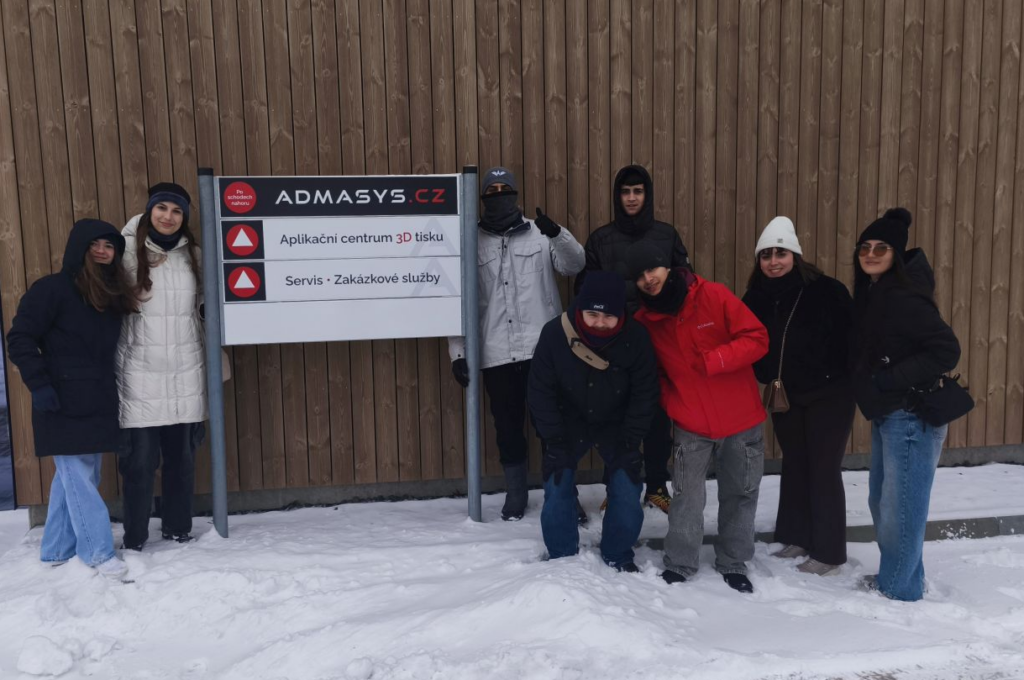
In February 2026, within the framework of the Erasmus+ project “3D Academy”, students and teachers participated in the mobility activity P1 – “3D Printing Step by Step”, which took place in Prague. During this mobility, the group visited the company Adamsys, where several technical workshops and demonstrations were organized to introduce participants to professional additive manufacturing technologies used in industry.
One of the practical workshops focused on the post-processing phase of powder-based 3D printing, an essential step after the printing process is completed. While powder-based technologies allow complex objects to be manufactured layer by layer inside a bed of fine material, the printed parts are often surrounded by excess powder and may also be attached to support structures or bars that must be removed and cleaned before the final pieces are ready for use.
During the workshop, experts from Adamsys explained how parts printed using powder technologies are first removed from the powder bed, where multiple objects can be produced simultaneously in a single printing cycle. Students learned that this capability is one of the main advantages of powder-based additive manufacturing: a large number of components can be placed inside the build volume and printed together in one single production run, making the process highly efficient for industrial production.
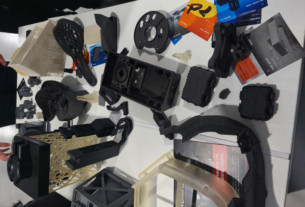
Once the printing process is finished, the parts must undergo cleaning and post-processing procedures. The Adamsys specialists demonstrated how the printed pieces, often still connected by thin bars or support elements, are carefully separated and prepared for cleaning. These structures help stabilize the parts during the printing process but must be removed afterward to obtain the final shape of the product.
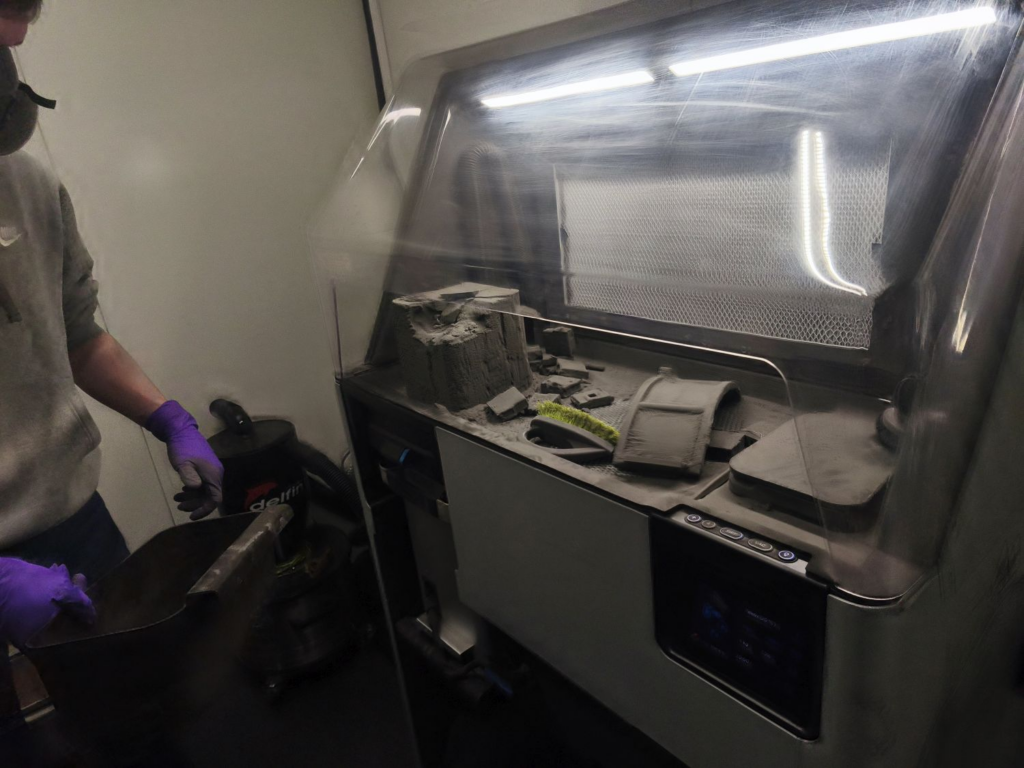
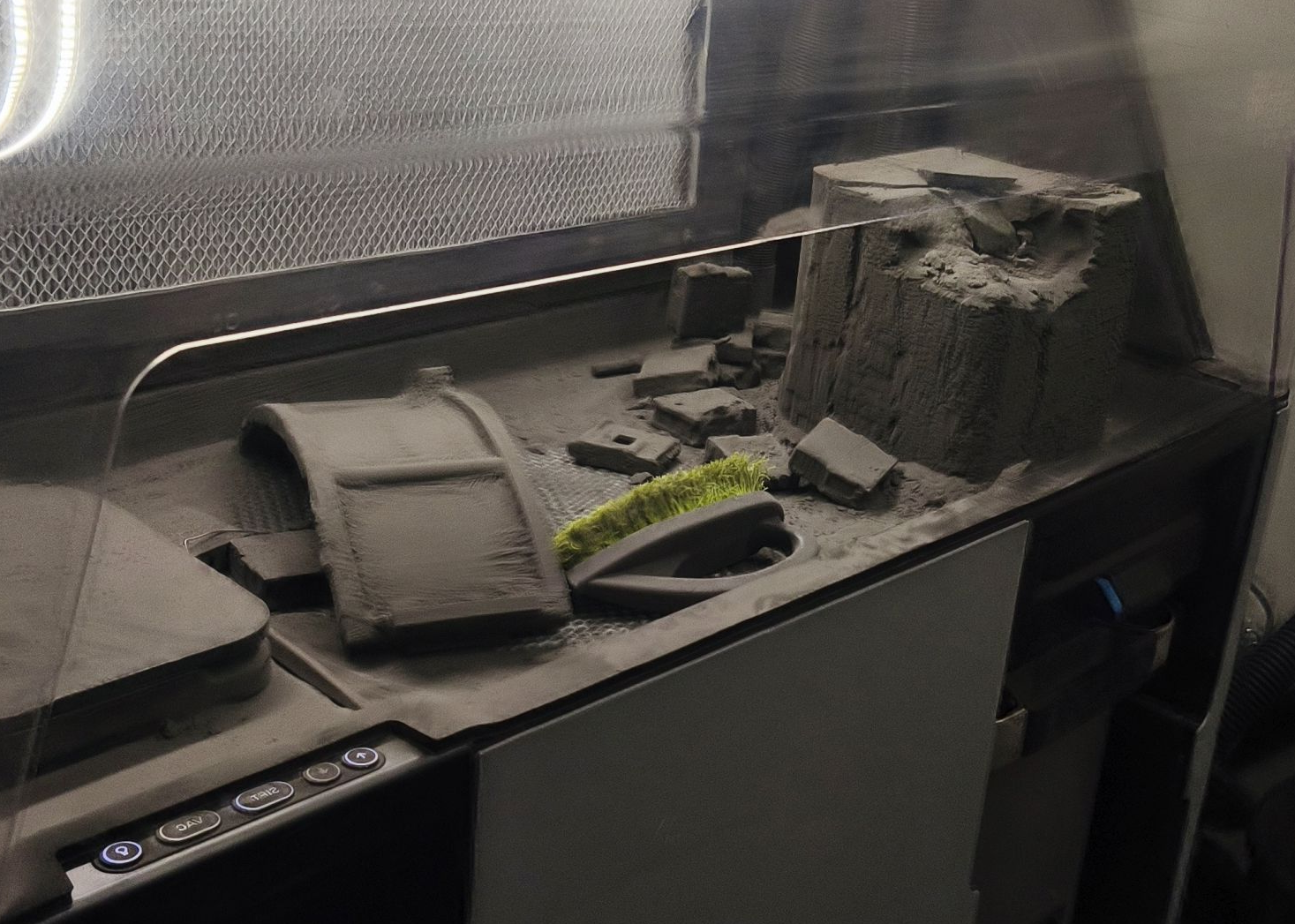
The workshop also introduced students to the industrial vacuum systems and cleaning equipment used to remove the remaining powder from the printed objects. These professional vacuum systems are designed to safely collect fine powder particles while preventing contamination and allowing unused powder to be recovered and reused. The experts explained that this recycling process improves both the efficiency and sustainability of powder-based additive manufacturing.
Participants observed how technicians carefully use industrial aspirators, compressed air tools, and specialized cleaning stations to remove excess powder from complex geometries and internal cavities. This process ensures that the printed parts are completely clean and ready for further finishing steps if required.
Another important advantage highlighted during the workshop was the production efficiency of powder-based technologies. Because the powder itself supports the parts during printing, many different components can be arranged within the same build volume without the need for additional support structures. This allows companies to manufacture multiple pieces simultaneously, reducing production time and optimizing the use of the machine.
For the students involved in the 3D Academy Erasmus+ project, this workshop provided valuable insight into an often overlooked but crucial stage of additive manufacturing: post-processing. Understanding how printed parts are cleaned, separated, and prepared for use helped participants appreciate the complete workflow of industrial 3D printing.
The activity formed an important part of the mobility P1 – “3D Printing Step by Step”, reinforcing the project’s goal of developing practical technological knowledge and giving students direct exposure to real industrial practices in the field of additive manufacturing.