3D Scanning Workshop at Adamsys – Erasmus+ 3D Academy
In February 2026, students and teachers participating in the Erasmus+ project “3D Academy” took part in the international mobility P1 – “3D Printing Step by Step”, which was held in Prague. During this mobility, the group visited the company Adamsys, where several workshops and demonstrations introduced participants to advanced technologies used in the field of additive manufacturing and digital design.
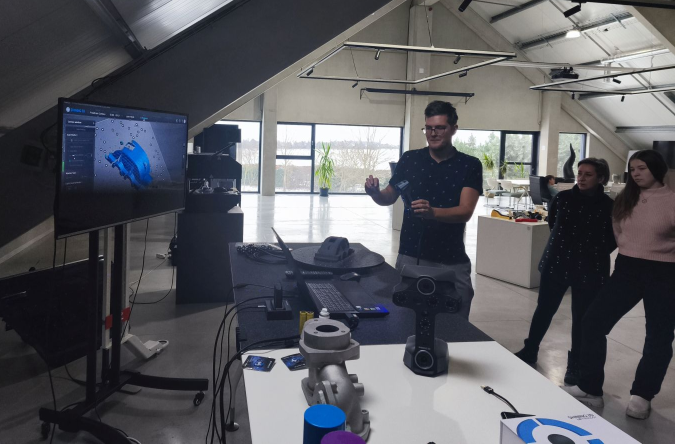
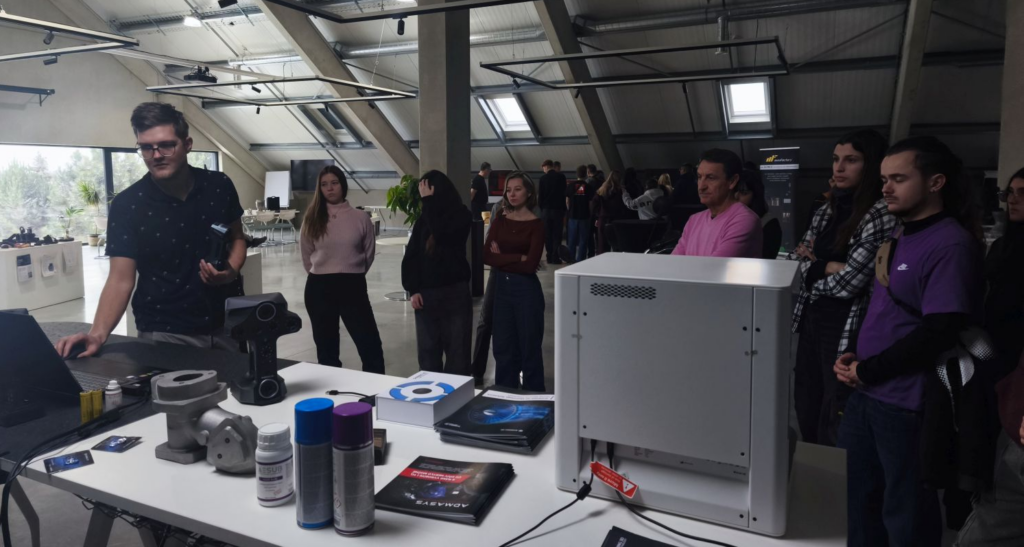
One of the most engaging activities during the visit was a 3D scanning workshop, where students had the opportunity to learn how real objects and people can be digitally captured and transformed into three-dimensional models.
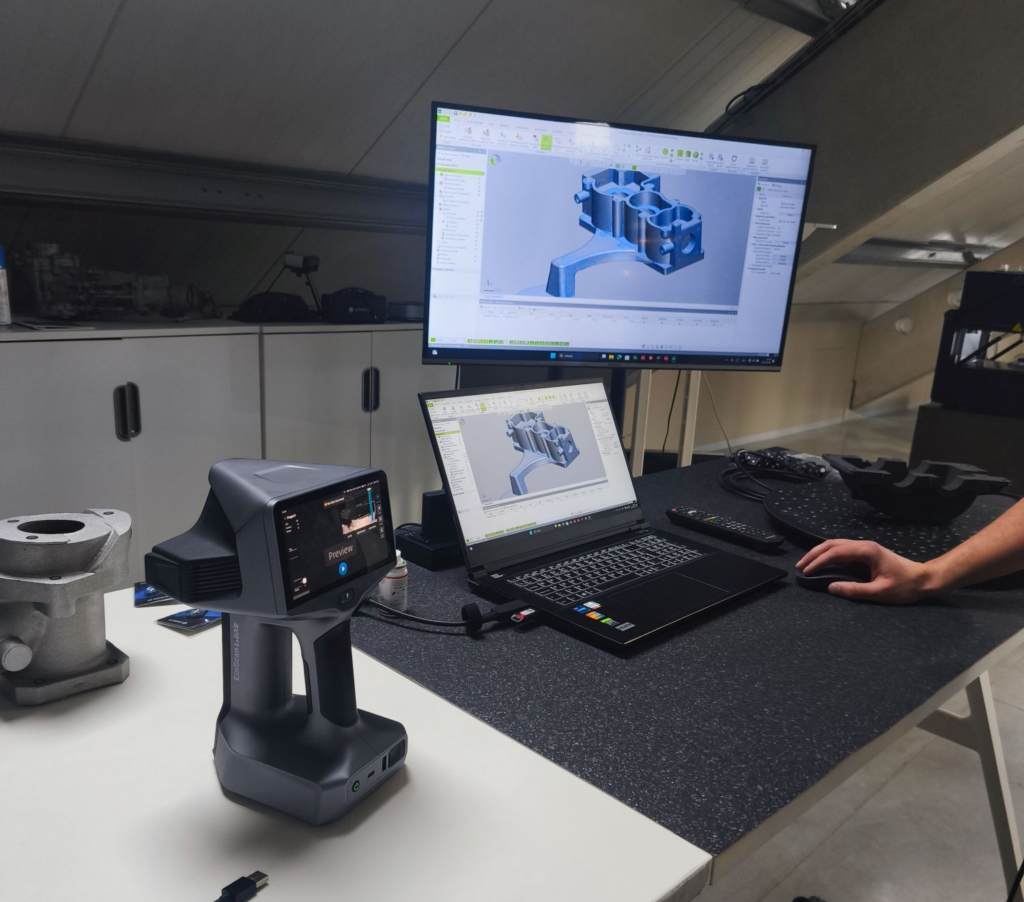
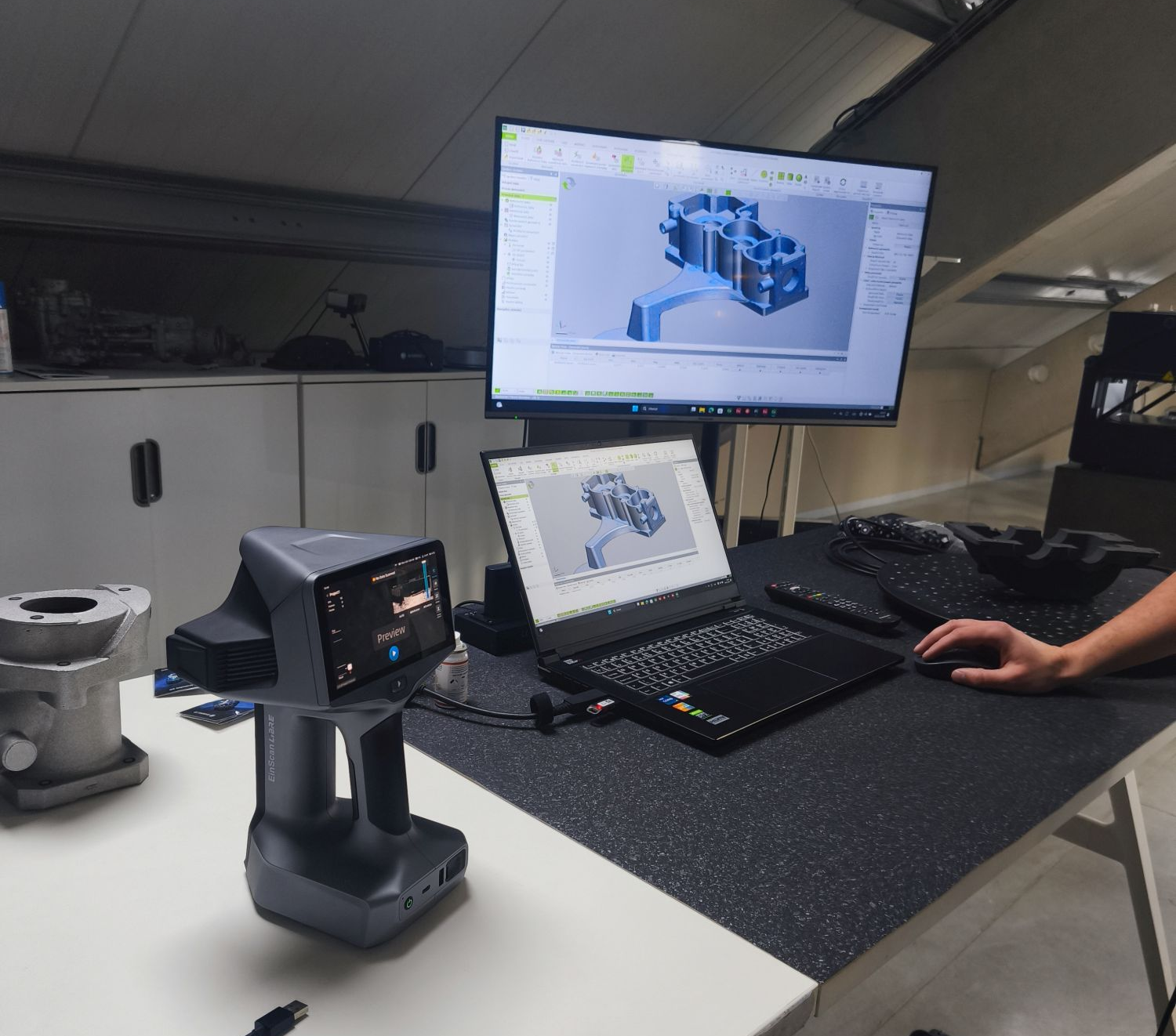
At the beginning of the session, specialists from Adamsys explained the basic principles of 3D scanning technology. Unlike traditional modeling methods where objects are created manually using design software, 3D scanning allows a real object to be captured by recording its shape, dimensions, and surface details. This information is then converted into a digital 3D model that can be edited, analyzed, or even reproduced using 3D printing.
During the demonstration, the experts showed how professional 3D scanners work. These devices use optical sensors, cameras, or structured light to capture thousands of data points on the surface of an object. The scanner collects this information and generates a point cloud, which is later processed by specialized software to create a complete and accurate digital model.
The most exciting part of the workshop came when several students volunteered to be scanned in 3D. Using a handheld scanning system, the technicians moved around the students while the scanner captured their body shape from multiple angles. Within a few minutes, the software generated detailed digital 3D representations of the participants, allowing everyone to see how quickly real-world objects can be transformed into virtual models.
Students learned that these models can later be refined, cleaned, and prepared for 3D printing, making it possible to create physical replicas of the scanned objects or people. The Adamsys team also explained how 3D scanning is widely used in fields such as engineering, cultural heritage preservation, medical design, animation, video games, and product development.
The workshop also highlighted the advantages of combining 3D scanning with additive manufacturing. By scanning real objects and converting them into digital files, designers and engineers can reproduce complex shapes, repair damaged parts, or create customized products with great precision.
For the students involved in the 3D Academy Erasmus+ project, this activity was a fascinating introduction to another important technology within the digital manufacturing ecosystem. Seeing their classmates transformed into digital 3D models made the learning experience both educational and memorable.
This workshop was an important part of the mobility P1 – “3D Printing Step by Step”, contributing to the project’s objective of developing practical digital skills and encouraging innovation through hands-on experiences with modern technologies.