Advanced 3D Printing with Carbon Fiber and Aluminum – Demonstration at Adamsys
In February 2026, students and teachers involved in the Erasmus+ project “3D Academy” participated in the international mobility activity P1 – “3D Printing Step by Step”, which took place in Prague. As part of the educational program, the participants visited the technology company Adamsys, where they attended several demonstrations focused on advanced additive manufacturing technologies used in professional environments.
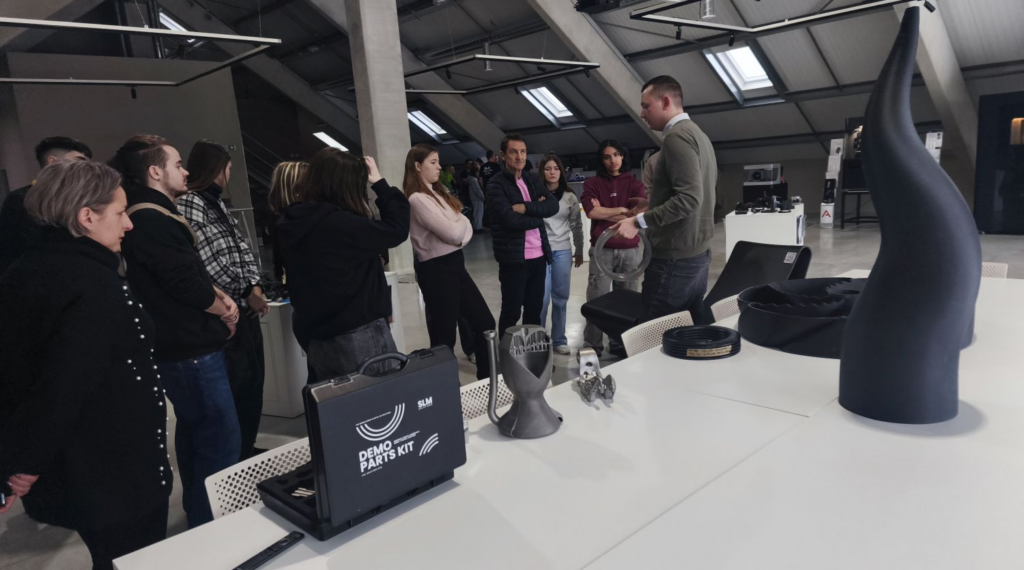
One of the most interesting sessions during the visit was a technical demonstration of 3D printing technologies using carbon fiber and aluminum materials. This activity allowed students to discover how modern 3D printing machines are capable of producing strong, lightweight, and highly functional components used in industrial applications.
The experts at Adamsys began the demonstration by explaining the importance of high-performance materials in additive manufacturing. Unlike standard plastic filaments used in basic 3D printers, industrial machines can work with reinforced materials such as carbon fiber composites or with metal materials such as aluminum, which offer greater strength, durability, and resistance to demanding conditions.
During the session, students learned about carbon fiber reinforced 3D printing, a technology commonly used to manufacture parts that require a high strength-to-weight ratio. Carbon fiber composites are widely used in industries such as automotive engineering, aerospace, robotics, and advanced product design. The Adamsys specialists explained how certain industrial printers can combine thermoplastic materials with continuous or chopped carbon fiber reinforcement to create parts that are significantly stronger than standard plastic prints.
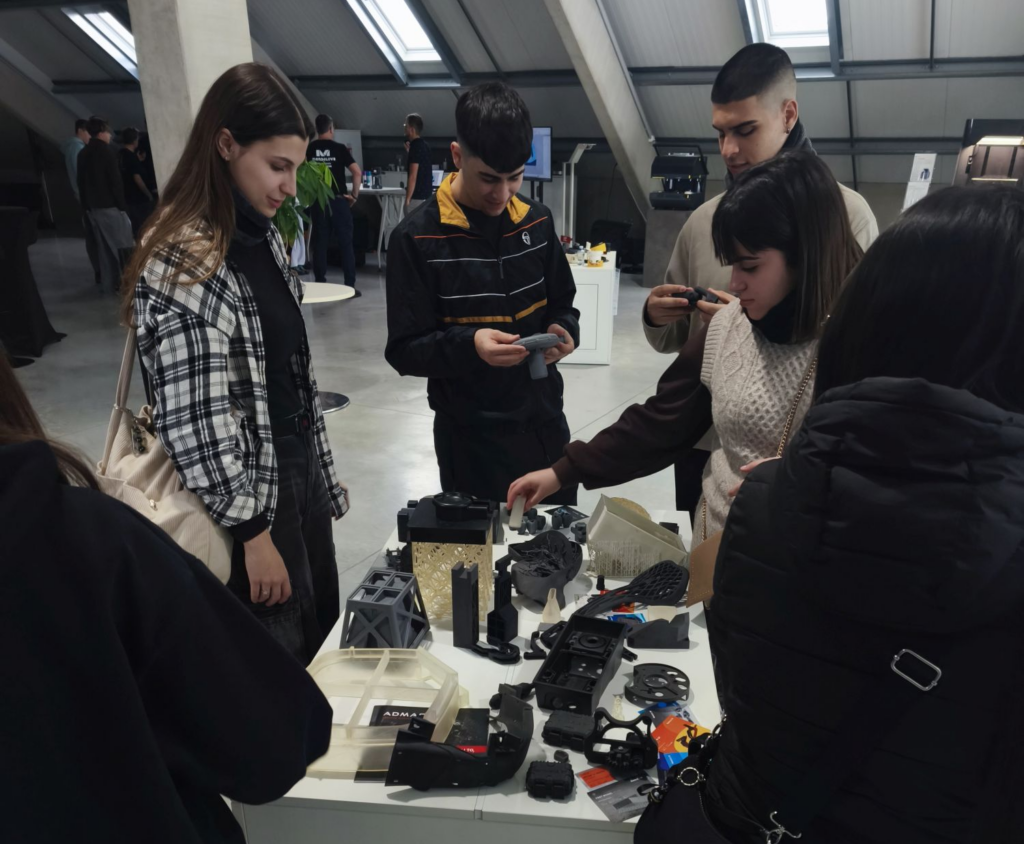
Participants also received an introduction to metal 3D printing using aluminum, an important technology in modern manufacturing. Aluminum is valued for its light weight, corrosion resistance, and mechanical strength, making it an ideal material for engineering applications. In advanced metal additive manufacturing systems, fine aluminum powder is fused layer by layer using controlled energy sources to produce complex and highly precise components.
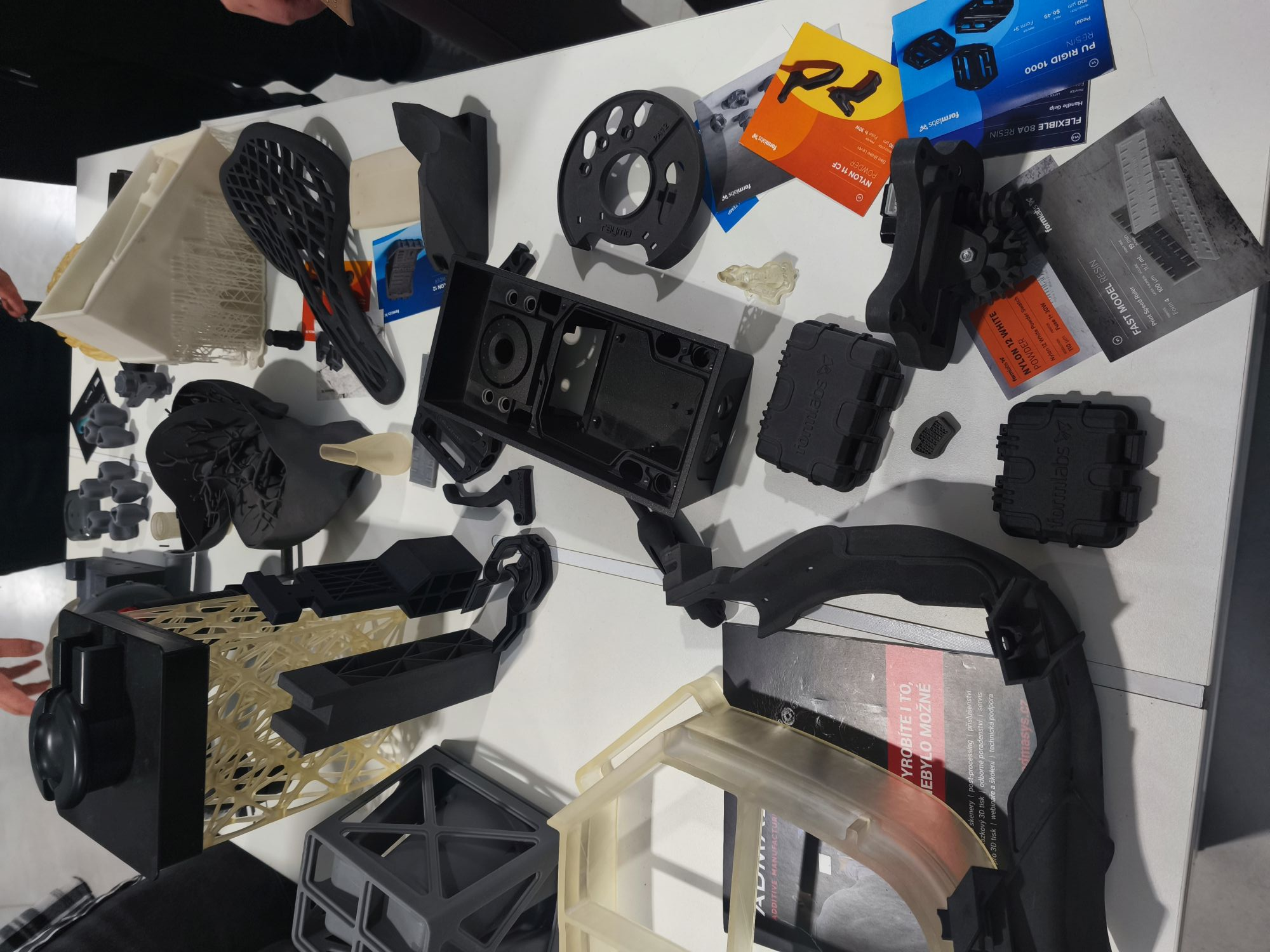
The demonstration highlighted the advantages of using these materials, including improved structural strength, reduced weight, and the ability to create complex geometries that would be difficult or impossible to manufacture using traditional methods. Students could observe examples of real industrial parts produced with these technologies, which illustrated their applications in modern engineering and production.
The Adamsys team also discussed the importance of design, machine calibration, and post-processing when working with advanced materials. Printing with carbon fiber composites or metal materials requires specialized equipment, precise parameters, and professional finishing processes in order to achieve optimal results.
For the students participating in the 3D Academy Erasmus+ project, this demonstration was an inspiring opportunity to explore how additive manufacturing continues to evolve beyond basic plastic printing. By learning about advanced materials such as carbon fiber and aluminum, the participants gained a deeper understanding of how 3D printing is transforming industries and enabling innovative engineering solutions.
This activity formed an important part of the mobility P1 – “3D Printing Step by Step”, contributing to the project’s goal of developing technical skills, encouraging innovation, and strengthening international collaboration through practical learning experiences.