As part of the collaboration between our Erasmus+ 3D Academy and Green ITC projects, our students participated in an educational activity at the University of Málaga’s research facilities in Málaga TechPark (PTA), where they explored the evolution of computing technologies and their applications in scientific research, biotechnology, and bioinformatics.
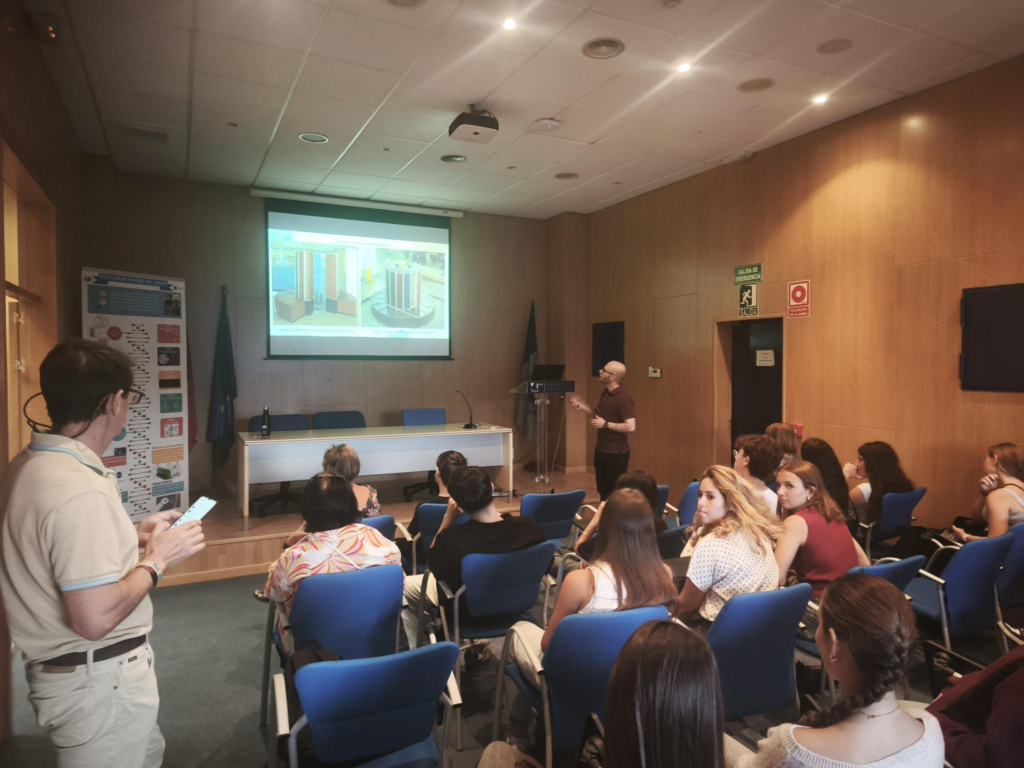
During the workshop, David Castaño and Luis Díaz introduced students to the development of advanced computing systems and explained how modern technologies have transformed scientific research, particularly in fields such as DNA analysis, genetics, bioinformatics, and computational biology.
This activity provided an excellent opportunity to connect scientific innovation with the educational objectives of the 3D Academy project, which encourages students to acquire new skills in 3D design, digital modelling, additive manufacturing, virtual reality, and emerging technologies.
Students discovered how powerful computing systems can support the creation of complex digital models, scientific visualizations, molecular simulations, and advanced engineering applications. These technologies demonstrate the growing importance of computational tools in modern scientific and industrial environments.
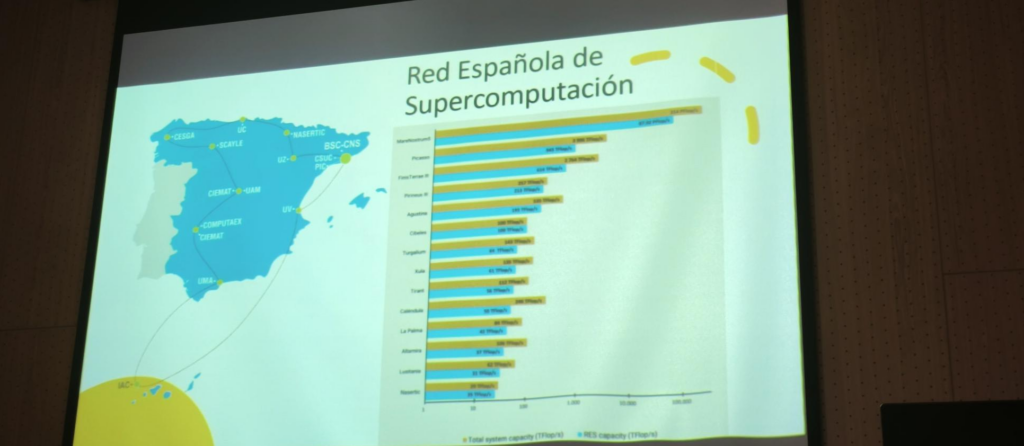
The experience also highlighted the connection between bioinformatics and 3D visualization, showing how biological structures, molecular models, and scientific data can be represented and studied using advanced digital technologies.
From the perspective of the Green ITC project, students reflected on how scientific computing and biotechnology can contribute to environmental protection through biodiversity research, genetic studies, ecosystem analysis, and the development of more sustainable scientific solutions.
The synergy between both Erasmus+ projects became particularly clear: 3D Academy focuses on developing practical technological and digital engineering skills, while Green ITC explores how these technologies can be applied responsibly to address environmental challenges.
By connecting classroom learning with real scientific research, the activity encouraged creativity, critical thinking, interdisciplinary collaboration, and a deeper understanding of how emerging technologies can improve society.
We would like to express our sincere gratitude to David Castaño and Luis Díaz for sharing their knowledge and providing our students with such an enriching educational experience.
A wonderful example of how European educational cooperation can connect 3D innovation, scientific research, biotechnology, and environmental sustainability to inspire the next generation of digital innovators!